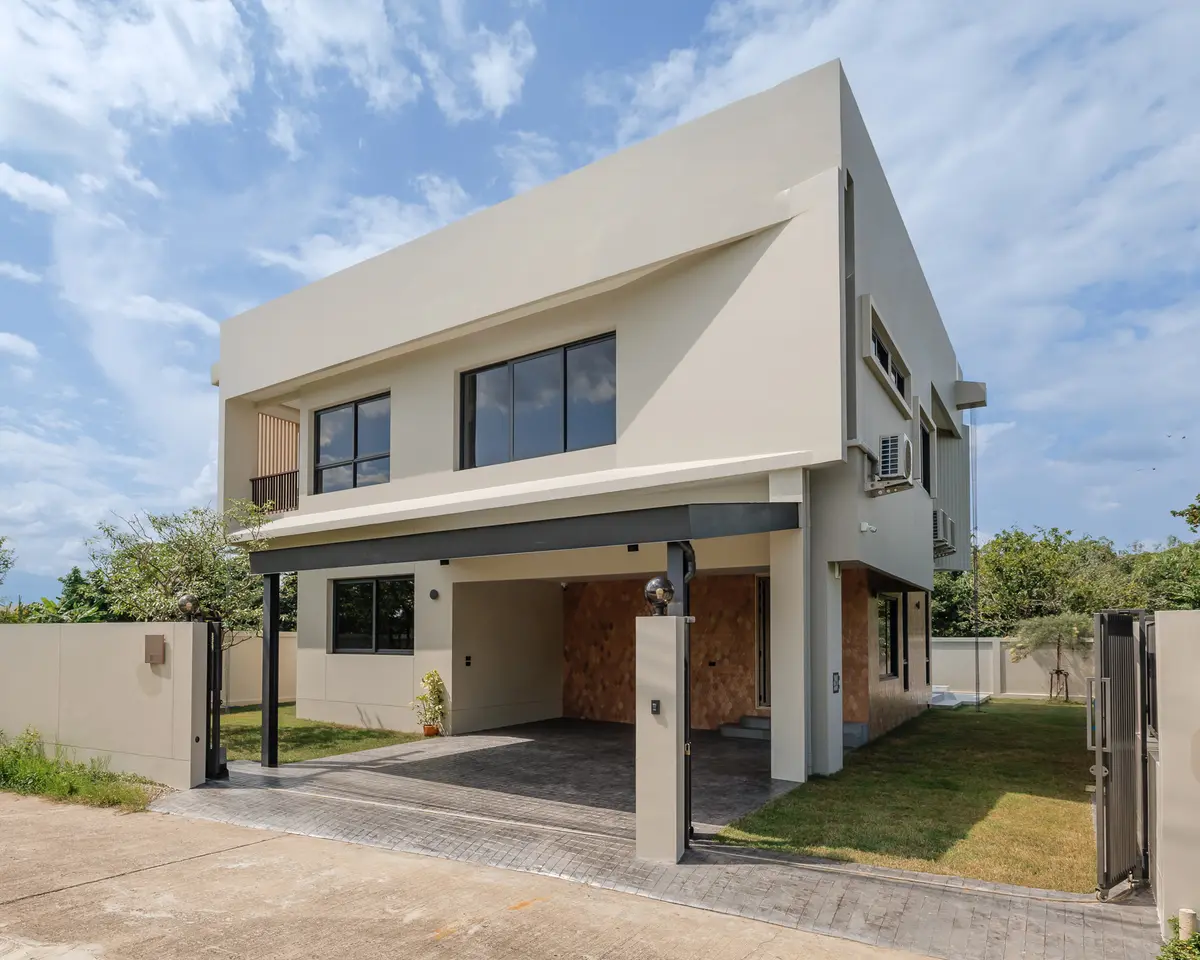
Location due diligence is not a list of the greatest number of nearby places. It is a test of whether the few routes that matter to your household work on ordinary days. Villa Alive is on Si Bua Ngoen Road, Soi 19, Tha Sala, in Mueang Chiang Mai. That city-district address is useful context, but it does not replace a real journey at the times you expect to travel.
Begin with three essentials: the shopping centre you would actually use, the international school relevant to your family, and the hospital you would choose. Add an airport or workplace route only if it genuinely shapes your week. The aim is not to prove that the villa suits everyone; it is to discover whether it suits you.
1. Build a short route list around real life
Choose one primary and one backup destination in each essential category. For schools, confirm the actual campus, year group and drop-off entrance; a school name may cover more than one location. For hospitals, distinguish routine outpatient care from a preferred emergency facility. For shopping, decide whether your weekly routine depends on a major mall, supermarket or neighbourhood services.
Do not turn every attraction in Chiang Mai into a distance claim. A shorter, household-specific list is more useful and less likely to become outdated. Record the exact destination pin rather than a broad neighbourhood name.
2. Test routes at the hours you would use them
Map estimates change with traffic, weather, roadworks and school schedules. Test a weekday morning, a late-afternoon return and a weekend trip. If school runs matter, drive the route on a school day and check where queues form. If healthcare access matters, inspect both the normal route and a practical alternative.
When you visit Villa Alive, start or finish the viewing with one of these journeys. A live route tells you more than a single advertised number of minutes. Keep the date and departure time with your notes so comparisons between homes remain fair.
3. Check the last kilometre, not only the map
The final approach can affect daily comfort as much as the headline distance. Observe road width, turning points, drainage, lighting, visibility, delivery access and how two cars pass. Visit after rain if possible, and ask which roads are public, private or shared rather than assuming from appearance.
Also test the approach at night. Notice noise, street activity and whether a guest, taxi or emergency vehicle can identify the entrance easily. These are observations to verify on site, not conclusions that can be guaranteed from an online map.
4. Match the location to the home's actual role
A full-time family home may be judged by school-day reliability and errands. A retirement home may put hospital choice, quieter routines and manageable maintenance first. A second home may prioritise simple airport transfers, trusted property care and access to the places used during shorter stays.
Villa Alive is presented as a four-bedroom, five-bathroom wellness pool villa in Mueang Chiang Mai. Those features may fit a household that wants private leisure space while remaining in the city district, but the route test should decide whether this particular address supports your own weekly pattern.
City-district villa versus farther-out villa
| Factor | Mueang City District | Farther Out |
|---|---|---|
| Daily routes | May reduce some cross-city journeys, depending on the exact destination and traffic. | May add travel time but can work well for households whose school, work or lifestyle is already outside the centre. |
| Space and setting | Often chosen for access; the buyer should inspect privacy, noise and the immediate approach carefully. | May offer a different sense of space or scenery; maintenance and transport needs can be greater. |
| Best fit | Buyers whose frequent destinations align with the tested routes. | Buyers who value the setting and accept, or do not need, frequent city journeys. |
Neither option is automatically better. Compare the same destinations, dates and departure times.
What to check
- Pin the exact Villa Alive entrance and each real destination.
- Drive the school, hospital and shopping routes at realistic times.
- Check an alternative route for the most important journey.
- Inspect road width, drainage, lighting, turning and delivery access.
- Visit in daylight and after dark; after rain if practical.
- Ask which access roads and shared areas are public, private or subject to agreements.
- Record actual journey dates and times instead of relying on one advertised figure.
Frequently asked questions
How many minutes is Villa Alive from an international school, hospital or mall?
There is no single responsible answer without naming the exact destination and departure time. Use the project address as the starting point, check live mapping, then drive the route during the hours relevant to your household.
Does being in Mueang Chiang Mai mean every city destination is close?
No. Mueang is a broad district, and traffic patterns vary. The address is useful context, not a guarantee of a particular commute.
What should I do during a private viewing?
Combine the home inspection with at least one real route, inspect the final approach and ask for written clarification of road access or shared-area responsibilities where relevant.
Sources and scope
Project facts should be reconfirmed for the specific home before reservation. Legal, tax, visa and ownership questions require current advice for the buyer’s circumstances.
- Villa Alive official website — Project location and current project presentation; reconfirm details with the seller.
- Google Maps route planner — Buyer-directed route testing only; travel times vary by departure time and traffic.
Ready to compare the home with your checklist?
Request a private viewing, ask for the current written specification, or review the floor plans before deciding.